What should an AI CRM do for an independent agent in 2026?
Independent agencies struggle when a lead arrives in one tool, a quote is discussed in another, and the next follow-up lives in someone's memory. The buying question is not simply, “Does this CRM have AI?” It is, “Can it keep the conversation moving without blurring the policy record?”
A useful AI CRM should capture opportunities, organize conversations, assign next steps, and make outreach easier across inquiries, quotes, service, renewals, referrals, and retention. It does not replace every system your agency uses.
CRM, AMS, and marketing tools have different jobs
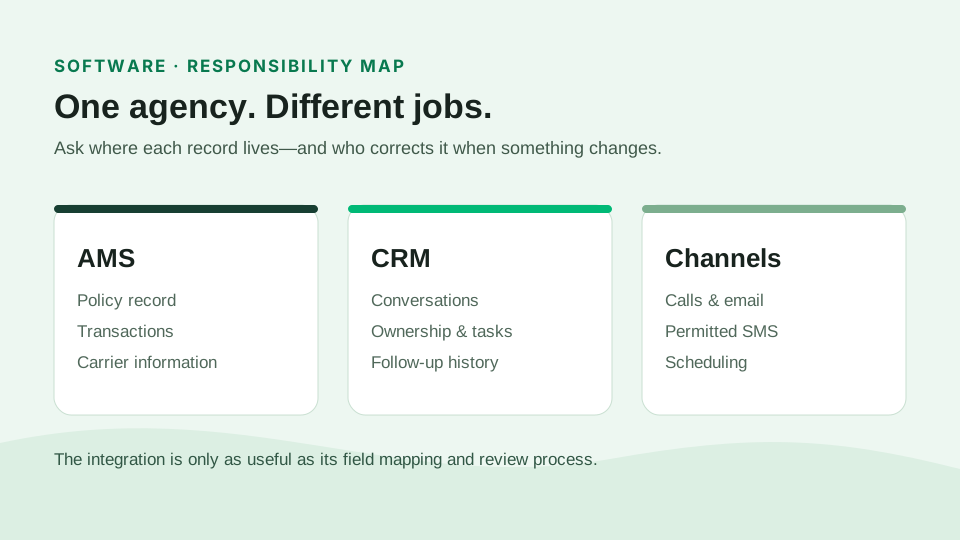
In a recommended arrangement, an agency management system (AMS) is the policy system of record for policies, accounts, transactions, and documentation. That depends on the agency's processes, carrier relationships, and configuration, so confirm it. A vehicle or coverage change generally belongs in the designated AMS and carrier process.
A CRM supports conversations around that record. It can help a producer see an opportunity, log a call, assign a task, remember a callback, or coordinate a renewal conversation. It makes relationship work visible and accountable; it is not automatically the source of truth for policy details.
Marketing automation is narrower: it delivers planned campaigns such as newsletters or review requests. A campaign tool alone may not show the complete history of a quote, client reply, and handoff. Decide which system owns each piece of information and verify whether your specific AMS and other tools integrate. “Works alongside” is not a guaranteed two-way sync.
See what a CRM does differently from an AMS and the Better Agency platform.
Ten questions to ask every AI CRM vendor
Use this checklist in a demo. These are evaluation questions, not assumptions that any particular platform includes every capability.
- Lead capture and source tracking: Can the system capture leads from the sources we use and preserve the original source so we can see what created the opportunity?
- Contact management and a unified timeline: Can one contact record show calls, texts, emails, notes, tasks, and status changes without forcing staff to search multiple inboxes?
- AI inbox and conversation summaries: Can AI summarize a long exchange, identify a possible next step, and show the underlying messages so a human can check the summary?
- Pipeline and opportunity tracking: Can we define stages that match our sales process, assign ownership, and see which opportunities need action?
- Email and SMS campaigns: Can the team build consent-aware, targeted campaigns with clear stop rules when a person replies or takes over?
- Calling, power dialing, and call logging: What calling options are native or connected, and how are attempts, outcomes, recordings, and notes attached to the right contact?
- Appointment scheduling: Can prospects book within rules we control, and does the appointment create the right owner, reminder, and follow-up?
- Quote follow-up automation: Can the system prompt a timely follow-up after a quote while allowing an agent to pause, change, or personalize the sequence?
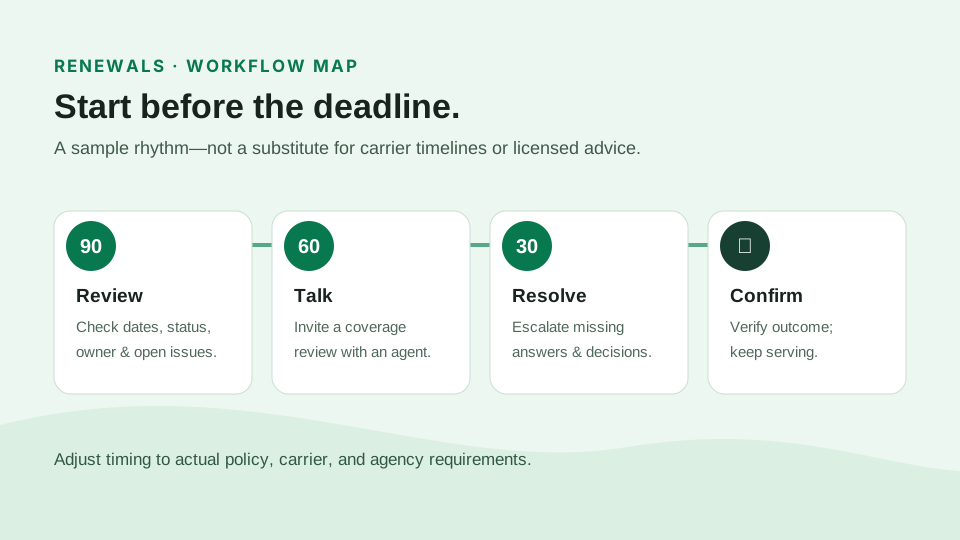
- Renewals, cross-sell, and retention: Can it support planned outreach to existing clients, with human review for coverage questions rather than treating a campaign as advice?
- Reporting: Can managers report on lead source, response and follow-up activity, producer workload, pipeline movement, and revenue-related activity using definitions they understand?
Where AI can help—and where it should stop
A sensible AI evaluation standard is whether it can reduce sorting and preparation without making an insurance decision. You might use it to prioritize a contact after a quoted prospect replies or a renewal touchpoint is due, or to draft a recap—but only with review and an easy correction path.
For example, a client sends messages about a new vehicle, a billing question, and a request to call after work. An AI summary could group those threads and suggest a callback. The agent should check the original messages, verify policy information in the AMS, and decide what to say. If the source conversation is hidden or correction is difficult, the convenience may not be worth the risk.
Four concrete demo questions
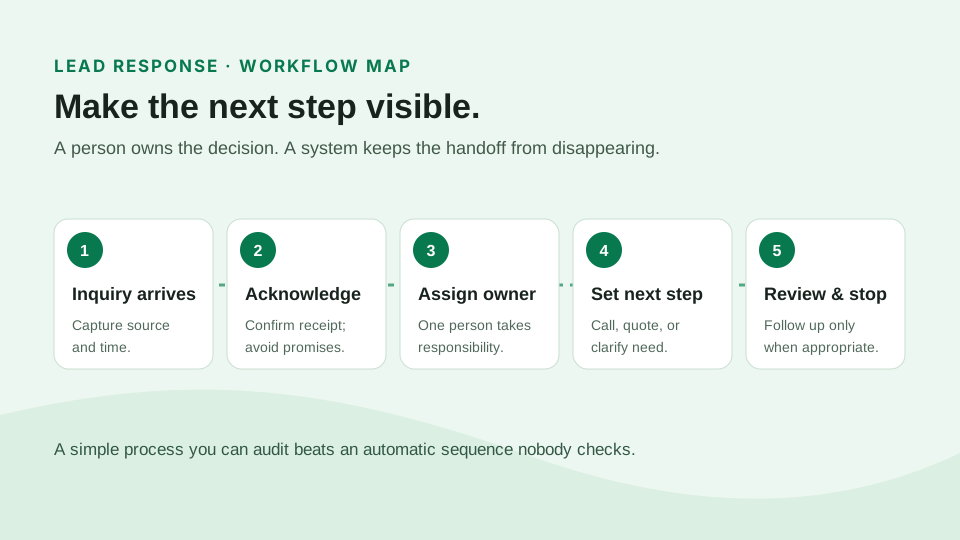
- “Show us a new web lead arriving, being assigned, receiving an acknowledgment, and creating a next task. Where can we see the source, owner, and next-step history?”
- “Now reply as the prospect. What stops the automated messages, who is notified, and where is the conversation recorded? How do we capture and audit consent for SMS, email, and any call recording?”
- “Show a quote follow-up and a renewal campaign. Can a producer pause either one, edit the message, record the human decision, and correct an AI summary while retaining the original exchange?”
- “Which fields and workflows are supported for our exact AMS? What is imported, what is synchronized, how often, and what happens when the connection fails? Who can access, export, or delete the data, and what retention settings apply?”
A pragmatic way to choose
Start with the gap that costs your team the most attention: unworked leads, missed quote callbacks, unclear service ownership, or inconsistent renewal outreach. Map the handoff from intake to completion. Then ask each vendor to demonstrate that workflow with your terminology, permissions, and escalation rules—not a generic slide deck.
Keep policy work in the designated policy system, relationship work visible in the CRM, and marketing automation where appropriate. Verify integrations before promising a seamless stack. For an audit, select a defined sample of recent inquiries and trace each from intake through the next action: record ownership, missed next steps, missing fields or messages, and how often a reviewer corrected an AI summary. Check consent, access, and retention settings too. Use those observations to define exception ownership; do not generalize beyond the sample.
Ready to compare your stack with a CRM built around agency follow-up? Talk with Better Agency about your workflow, then review pricing.